
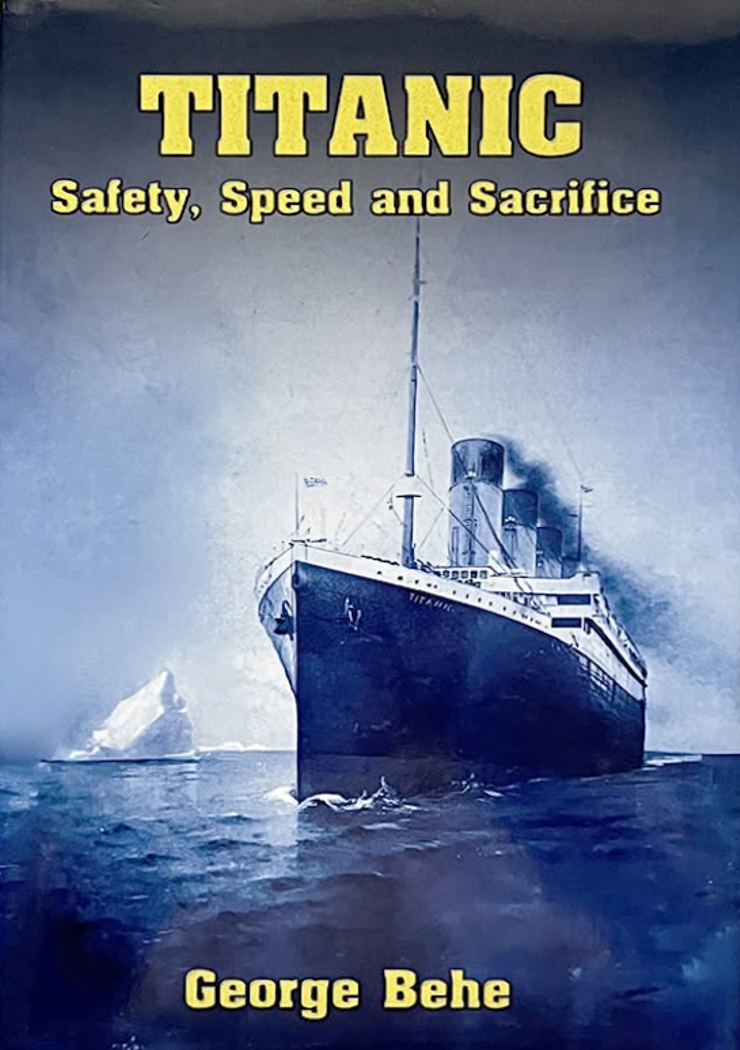
TITANIC
Safety, Speed and Sacrifice
George BEHE
Transportation Trails (1997)

|
|
TITANICSafety, Speed and SacrificeGeorge BEHETransportation Trails (1997) |
|
|
|
|
|||
|
The sinking of the Titanic in April of 1912 was a tragedy of epic proportions over fifteen hundred passengers and crew-men perished when the great liner foundered after striking an lceberg in the cold Labrador current in mid-Atlantic.
Resultant newspaper coverage of the disaster made it one of the major news events of the Twentieth Century.
Most historians have felt that the Titanic tragedy was unavoidable, the result of a rare combination of freak occurrences that were unlikely to ever happen again. Is this truly the case? Were unsuspected influences finally making their presence felt at the most crucial stage of the Titanic's maiden voyage - the hours of darkness during which the great vessel was approoching that huge icefield in mid-Atlantic? In Titanic: Safety. Speed and Sacrifce author George Behe, past vice-president of the Titanie Historical Socicty, draws on previously-untapped historical sources to present us with startling new information about the Titanic tragedy. Behe's information is troubling because it suggests that not only was the Titanic disaster completely avoldable, but that criminal negligenee on the part of the Titanic's bridge officers was the sole cause of the tragedy. In addition, Behe presents evidence which suggests that the White Star Line did its best to hide evidence of its own guilt in order to prevent lawsuits from bringing about the company's financial ruin. Did the Titanic's bridge officers succumb to the line chairman's desire for the vessel to reach New York a day carly? Why did Titanic's speed increase to 22% knots just four hours before the collision occurred? These and other historical puzzles are closely examined and thoroughly documented by George Behe in this important new book. Titanic: Safety, Speed and Sacrifice is saddle stitched with 88 pages more than 50 photos and illustrations and an index. |
 |
|